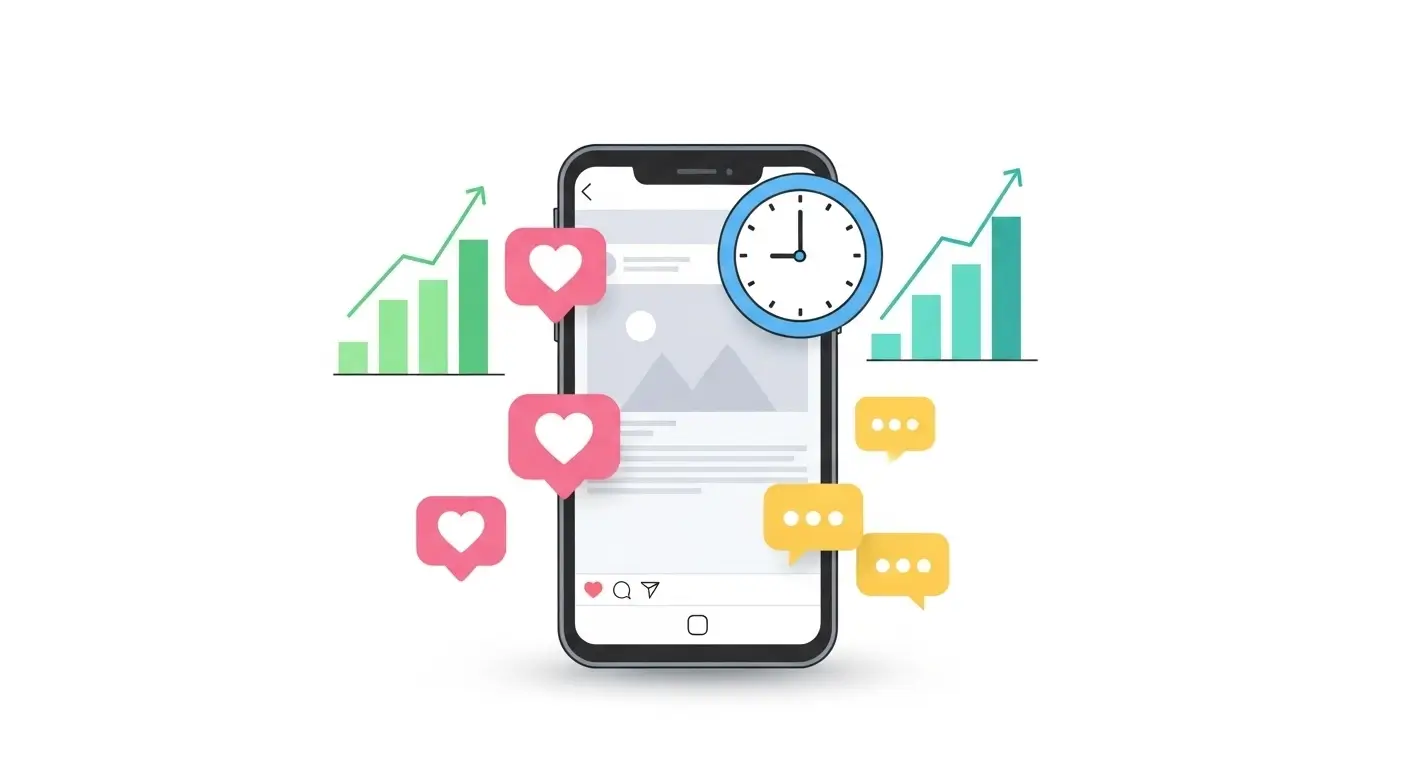
Discover the best time to post on Instagram to maximize reach, engagement, and growth. Data-backed breakdown by day, content type, and industry.
Posting consistently on Instagram is important, but posting at the right time is what separates average results from real growth. Even high-quality content can underperform if it's published when your audience is inactive. That's why understanding the best time to post on Instagram is critical for creators, brands, and businesses looking to maximize reach, engagement, and follower retention.
This guide provides a complete, data-backed breakdown of when to post on Instagram, how timing affects the algorithm, and how to identify the best posting time for your specific audience—using both Instagram Insights and behavioral signals like unfollow patterns.
Short Answer — Best Time to Post on Instagram (Quick Results)
The best time to post on Instagram (global average):
9:00 AM to 11:00 AM, especially on Tuesday, Wednesday, and Thursday.
Why this answer works for most accounts:
- Users check Instagram during morning routines and work breaks
- Competition is lower than evenings
- Engagement happens faster, which boosts algorithmic reach
- Early likes, saves, and comments signal quality to Instagram
When this answer may not apply to you:
- Your audience is active late at night
- Your followers are in multiple time zones
- Your content is niche-specific (memes, nightlife, gaming, entertainment)
This is why relying only on averages is risky. Real optimization requires audience behavior data, not guesses.
What Does “Best Time to Post on Instagram†Really Mean?
The best time to post on Instagram is not about the clock—it's about how quickly your audience reacts after you post.
How Instagram's algorithm evaluates timing
Instagram prioritizes posts that:
- Receive engagement quickly
- Generate saves and shares
- Keep users watching (especially Reels)
- Create meaningful interactions
Timing directly impacts all of these signals. The first 30–90 minutes after posting are crucial. If engagement is slow, your post is shown to fewer people. If engagement is fast, reach expands automatically.
Best Time to Post on Instagram vs Posting Randomly
Posting randomly confuses the algorithm and weakens performance.
Optimized Timing
Faster engagement → wider reach → potential for viral circulation (24-48 hours).
Random Timing
Delayed engagement → limited distribution → often stops performing within 1–2 hours.
Best Time to Post on Instagram by Day (Data-Driven Breakdown)
Best Time to Post on Instagram by Content Type
| Content Type | Ideal Time Range | Key Factor |
|---|---|---|
| Reels | 11 AM – 2 PM & 6 PM – 9 PM | Watch time |
| Stories | 8–9 AM / 12–1 PM / 7–9 PM | Frequency |
| Carousels | 9 AM – 12 PM | Saves & Swipes |
| Photos | 10 AM – 1 PM | Aesthetics |
Best Time to Post by Industry
- E-commerce brands: 11 AM – 2 PM
- Personal brands & influencers: 9–11 AM, 7–9 PM
- Local businesses: 8–10 AM
- Coaches & educators: Weekdays, 9–11 AM
- Entertainment & meme pages: 6–10 PM
- B2B & service providers: Tuesday–Thursday, 9–11 AM
How to Find Your Best Time to Post (Step-by-Step)
Step 1 — Switch to a Professional Account
Instagram Insights shows audience activity times, engagement trends, and content performance metrics.
Step 2 — Analyze Audience Active Hours
Go to: Profile → Insights → Audience → Most Active Times. Focus on peak days, peak hours, and repeating patterns.
Step 3 — Track Engagement by Time Slot
Track performance for 14 days, watching likes, saves, shares, and reach. At the same time, watch for follower drops after posting. Sudden unfollows can indicate poor timing.
Monitoring unfollow behavior using an Instagram unfollower tracker can help identify whether posting at certain times correlates with increased unfollows—data Instagram Insights alone does not provide.
Step 4 — Test, Adjust, and Lock Your Schedule
Test 2–3 time slots and use A/B timing (same content, different days). Avoid changing schedules too frequently—consistency strengthens algorithm trust.
Best Time to Post on Instagram — Global vs Local Audiences
Time zone challenges
Global audiences don't engage at the same time. If your followers are spread across the world, a single "best time" may not exist.
Posting for international followers
Identify your top countries in Insights and optimize for the largest audience segment. Significant accounts often use a split-posting strategy: posting once for Region A and later for Region B.
Monitoring unfollow patterns across regions using tools like Unfollowers Tracker can help detect time-zone mismatches that cause disengagement.
Comparison Table — Best Time to Post Summary
| Category | Best Time Range | Worst Time | Notes |
|---|---|---|---|
| Reels | 11 AM – 2 PM | 3–5 AM | Watch time driven |
| Stories | Morning & Evening | Late night | Frequency matters |
| Feed Posts | 9 AM – 12 PM | After 9 PM | Early engagement critical |
| Weekdays | Tue–Thu | Monday night | Higher intent |
| Weekends | 10 AM – 12 PM | Late afternoon | Leisure scroll |
| New Accounts | 9–11 AM | Random times | Need fast signals |
Common Mistakes That Ruin the Best Time to Post
- Posting inconsistently: Confuses the algorithm and your audience.
- Ignoring audience geography: Posting for 3 AM in your audience's time zone.
- Overposting during peak hours: High competition can drown out your content.
- Chasing viral myths: Relying on generic trends rather than your own data.
Posting time only works when paired with quality and consistency.
FAQs — Best Time to Post on Instagram
What is the best time for maximum reach?
For most accounts, weekday mornings between 9 AM and 11 AM perform best, but personal analytics should always guide decisions.
Is the best time to post on Instagram different for Reels?
Yes. Reels perform better when users have time to watch—typically midday and evening hours.
Does the best time to post change over time?
Yes. Audience behavior evolves as habits change, so review your Insights monthly.
Can posting at the wrong time cause unfollowers?
Yes. Repeatedly posting when followers are inactive can reduce perceived value. You can download your Instagram data to analyze these patterns more deeply.